








Missing teeth can affect more than just your smile. They may make chewing difficult, change the way you speak, and gradually affect the appearance of your face. Dental implants are a widely used option for replacing missing teeth because they are designed to provide stable support for replacement teeth. However, before beginning treatment, the first and most important step is a detailed dental implant consultation.
If you are considering Dental Implants in Mohali, understanding what happens during your first consultation can help you feel more confident and prepared. During this visit, the dentist evaluates your oral health, examines the condition of your jawbone and gums, discusses suitable treatment options, and explains the expected procedure, timeline, and cost factors.
This guide explains what patients can expect during their first dental implant consultation in Mohali.
What Is a Dental Implant Consultation?
A dental implant consultation is an initial assessment in which a dentist determines whether dental implants may be a suitable tooth replacement option for you.
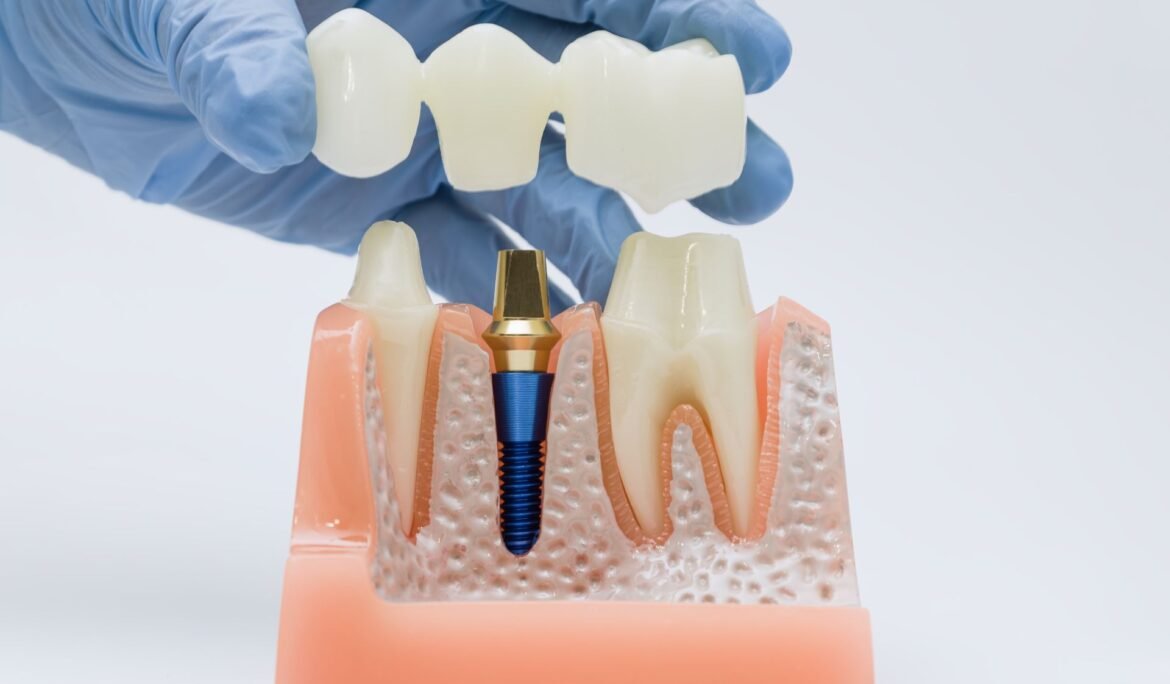
A dental implant is a small, screw-shaped medical-grade component, commonly made from titanium or another suitable material, that is placed in the jawbone to support a replacement tooth. Once it integrates with the surrounding bone, it can support a dental crown, bridge, or full-arch restoration.
The consultation is not simply about checking the missing tooth. It involves evaluating your overall oral health, medical history, bone condition, bite, and treatment expectations.
The dentist uses this information to develop an individualized treatment plan rather than recommending the same procedure to every patient.
1. Discussion About Your Dental Problems and Expectations
Your first appointment usually begins with a conversation about your dental concerns and what you hope to achieve through treatment.
The dentist may ask questions such as:
- How long ago did you lose your tooth?
- Was the tooth removed because of decay, infection, injury, or gum disease?
- Do you experience difficulty chewing?
- Are you currently using removable dentures or a dental bridge?
- Have you undergone any previous dental implant procedures?
- Are you looking to replace one tooth, several teeth, or an entire arch?
You should also explain whether you have concerns about appearance, comfort, speech, or eating.
This discussion helps the dentist understand your priorities and determine which treatment options should be considered.
2. Review of Your Medical and Dental History
Your general health plays an important role in dental implant planning. Before recommending treatment, the dentist reviews your medical and dental history.
You may be asked about:
- Diabetes and how well it is controlled
- Heart-related conditions
- Previous surgeries
- Current medications
- Smoking or tobacco use
- History of gum disease
- Previous radiation therapy involving the head or neck
- Allergies and other relevant medical conditions
Certain health conditions and medications can influence healing and implant treatment planning. For example, poorly controlled diabetes may increase the risk of complications, while smoking can negatively affect healing and implant success.
Having a medical condition does not automatically mean that you cannot receive dental implants. The dentist may recommend additional precautions, medical coordination, or treatment modifications depending on your circumstances.
Always provide accurate information about your health and medications so that your treatment can be planned safely.
3. Detailed Examination of Your Teeth and Gums
After reviewing your medical history, the dentist performs a clinical examination of your mouth.
This assessment helps identify any existing dental problems that may need attention before implant placement.
The examination may include:
Gum health: The dentist checks for gum inflammation, bleeding, infection, and signs of periodontal disease. Healthy gum tissues are important for maintaining the tissues around dental implants.
Condition of neighbouring teeth: Teeth next to the missing tooth are examined to identify decay, fractures, mobility, or existing restorations.
Bite assessment: Your bite and the way your upper and lower teeth come together are evaluated. Excessive biting forces may affect the long-term maintenance of an implant-supported restoration.
Oral hygiene: The dentist assesses your brushing and cleaning habits because good oral hygiene is essential for maintaining implants.
If gum disease, untreated cavities, or infections are present, these conditions may need to be treated before implant surgery.
4. Evaluation of Jawbone Density and Volume
One of the most important parts of a dental implant consultation is assessing the jawbone.
Dental implants require adequate bone support for placement and stability. When a tooth is lost, the surrounding jawbone may gradually shrink because it no longer receives the same stimulation from the tooth root.
The amount and quality of available bone can influence implant position, size, and treatment complexity.
The dentist may evaluate:
- Bone height
- Bone width
- Bone density and quality
- Distance from important anatomical structures
- Available space for the planned restoration
If there is insufficient bone in the proposed implant area, additional procedures such as bone grafting may be considered.
However, not every patient requires bone grafting. The decision depends on clinical findings and imaging results.
5. Dental X-Rays and 3D Imaging
Dental imaging helps the dentist understand the structures that cannot be examined through a routine visual check.
Depending on your case, the dentist may recommend:
Intraoral or panoramic X-rays: These images help assess the teeth, surrounding bone, and general oral structures.
CBCT scan (Cone Beam Computed Tomography): A CBCT scan provides three-dimensional information about the jawbone and nearby anatomical structures. It may be recommended when more detailed information is needed for implant planning.
Three-dimensional imaging can help the dentist evaluate bone dimensions, identify important structures such as nerves and sinuses, and plan the implant position.
Not every patient needs a CBCT scan. The dentist recommends imaging based on the complexity of the case and the information required for safe treatment planning.
6. Discussion of Suitable Dental Implant Options
Once the clinical examination and necessary investigations are complete, the dentist discusses possible tooth replacement options.
The recommended approach depends on how many teeth are missing, the condition of the surrounding teeth, bone availability, and your treatment goals.
Common options include:
Single Dental Implant
A single dental implant can replace one missing tooth. It generally supports an individual dental crown and may avoid the need to prepare neighbouring healthy teeth as required for some conventional bridges.
Multiple Dental Implants
When several teeth are missing, multiple implants may be used to support individual crowns or an implant-supported bridge.
The number and position of implants depend on the available bone, bite, and restoration design.
Full-Arch Dental Implants
Patients who have lost most or all teeth in an arch may be considered for a full-arch implant-supported restoration.
This treatment uses strategically positioned implants to support a fixed or removable prosthesis, depending on the treatment plan.
Implant-Supported Dentures
For some patients, implants can provide additional support and stability to dentures. This may help reduce movement compared with conventional removable dentures.
Your dentist will explain which options are clinically appropriate for your situation.
7. Understanding Whether Bone Grafting Is Required
Some patients have insufficient bone volume for predictable implant placement. In such cases, bone grafting may be recommended.
Bone grafting is a procedure that adds or supports bone in an area where additional volume is needed.
It may be considered when:
- A tooth has been missing for several years.
- The jawbone has become thinner or shorter.
- Bone loss has occurred due to infection or gum disease.
- The planned implant position requires additional bone support.
In certain situations, sinus augmentation may also be considered for the upper back jaw when there is insufficient bone height.
Bone grafting can add time, cost, and complexity to the treatment process. Your dentist will explain whether it is necessary and whether implant placement can be performed at the same time or should be delayed until healing has occurred.
8. Explanation of the Dental Implant Procedure
During the consultation, the dentist explains how the implant procedure is generally performed.
Although the exact steps differ from patient to patient, the process may involve the following stages:
Step 1: Initial assessment and planning
The dentist completes the clinical examination, reviews imaging, and prepares a treatment plan.
Step 2: Preparatory treatment
If necessary, existing infections, gum disease, or other dental problems are treated before implant placement.
Step 3: Implant placement
The implant is surgically placed into the jawbone under appropriate anaesthesia. The procedure is planned according to the patient’s anatomy and clinical requirements.
Step 4: Healing and osseointegration
The implant needs time to integrate with the surrounding bone. This biological process is known as osseointegration.
Step 5: Final restoration
After the dentist confirms adequate healing and stability, a suitable crown, bridge, or denture is attached to the implant.
In selected cases, immediate or early loading may be possible. However, this depends on factors such as primary implant stability, bone quality, bite forces, and the overall treatment plan.
9. How Long Does Dental Implant Treatment Take?
One of the most common questions patients ask during their first consultation is how much time the complete treatment will require.
There is no single timeline for every patient.
Some cases may be completed in a few months, while more complex treatments can take longer, especially when bone grafting or additional procedures are needed.
The treatment duration depends on:
- Number of implants required
- Quality and quantity of available bone
- Whether tooth extraction is necessary
- Need for bone grafting
- Healing and osseointegration
- Type of final dental restoration
- Individual healing response
Your dentist will provide an estimated timeline after examining your case.
10. Understanding Dental Implant Cost in Mohali
Dental implant cost is another important topic discussed during the first consultation.
The total cost may vary significantly depending on the treatment requirements and materials used.
Some factors that influence the cost include:
- Number of implants required
- Implant system and material
- Crown or prosthesis material
- Bone grafting or sinus augmentation
- Diagnostic imaging
- Complexity of surgery
- Temporary teeth, if required
- Additional treatments before implant placement
Patients should ask for a clear treatment estimate that explains what is included in the quoted amount.
It is also important to understand whether the consultation, scans, implant placement, abutment, temporary restoration, and final crown are included or charged separately.
Choosing an implant treatment solely on the basis of the lowest price may not be the best approach. Clinical planning, appropriate materials, surgical expertise, hygiene standards, and long-term maintenance are important considerations.
11. Questions You Should Ask During Your First Consultation
Your first visit is an opportunity to understand the treatment before making a decision.
Consider asking your dentist:
- Am I a suitable candidate for dental implants?
- Do I have sufficient jawbone for implant placement?
- Will I require bone grafting?
- What type of implant-supported restoration is suitable for me?
- How many appointments will be required?
- How long will the complete treatment take?
- What are the possible risks and complications?
- What will the total treatment cost include?
- What temporary tooth replacement options are available?
- How should I maintain my dental implants after treatment?
A good consultation should give you enough information to make an informed decision without feeling pressured to begin treatment immediately.
12. Who May Be Suitable for Dental Implants?
Dental implants may be considered for adults who have lost one or more teeth and want a stable replacement option.
However, suitability depends on several factors, including:
- Adequate bone support or the possibility of bone augmentation
- Healthy or treatable gum tissues
- Good oral hygiene practices
- Medical conditions that are appropriately managed
- Willingness to attend follow-up appointments
- Commitment to long-term implant maintenance
Age alone is not usually the deciding factor. The dentist considers overall health, jawbone condition, and individual treatment requirements.
Patients with uncontrolled medical conditions, active gum infections, or certain other risk factors may need additional evaluation before proceeding.
13. Why Choose a Professional Dental Implant Consultation in Mohali?
Dental implant treatment requires careful planning, clinical assessment, and follow-up care. A detailed consultation helps identify potential challenges before surgery and reduces the chances of unexpected treatment changes.
When selecting a dental clinic in Mohali, consider the following:
- Experience and qualifications of the treating dentist
- Availability of appropriate diagnostic facilities
- Clear explanation of the proposed treatment
- Proper sterilisation and infection-control practices
- Transparency in treatment costs
- Availability of follow-up and maintenance care
At Advanced Dental Center & Clinic, patients can discuss missing teeth, dental implant options, and possible treatment approaches based on their individual oral health requirements.
You can also explore M Medical Centre for additional healthcare information and related services.
Frequently Asked Questions About Dental Implant Consultation
1. How long does the first dental implant consultation take?
The duration depends on the complexity of your case. A consultation may include medical history review, oral examination, imaging, and treatment discussion. Additional investigations may require a separate appointment.
2. Is a dental implant consultation painful?
No. A routine consultation involving discussion, examination, and imaging is generally comfortable. If additional diagnostic procedures are required, the dentist will explain them beforehand.
3. Do I need a CBCT scan before getting dental implants?
Not everyone requires a CBCT scan. Your dentist may recommend one when three-dimensional information about the jawbone and nearby structures is necessary for treatment planning.
4. Can I get dental implants if I have diabetes?
Some people with diabetes can receive dental implants, particularly when their condition is well controlled. The dentist may review medical reports and coordinate with your physician when required.
5. What if I do not have enough bone for dental implants?
Bone grafting or other augmentation procedures may be considered to improve bone support. The appropriate approach depends on the location and amount of bone deficiency.
6. Can I get a temporary tooth while waiting for my implant?
In many cases, temporary tooth replacement options are available. These may include removable temporary dentures or other suitable restorations, depending on the treatment plan.
7. Is a dental implant better than a dental bridge?
Both options have advantages and limitations. An implant may replace a missing tooth without preparing neighbouring healthy teeth, while a bridge may be suitable in certain clinical situations. Your dentist can help compare the options.
Conclusion
A dental implant consultation is the foundation of a well-planned tooth replacement treatment. It helps the dentist evaluate your oral health, examine your jawbone, identify possible risks, and recommend an appropriate treatment approach.
If you are considering Dental Implants in Mohali, do not skip the initial assessment. Understanding the procedure, expected timeline, cost factors, and maintenance requirements can help you make a confident and informed decision.
For a professional dental implant consultation, visit Advanced Dental Center & Clinic, 52, Gian Jyoti Road, Phase 2, Sector 54, Sahibzada Ajit Singh Nagar, Mohali, Punjab 160055.
Book your dental consultation to discuss suitable tooth replacement options and take the first step towards restoring your smile.