








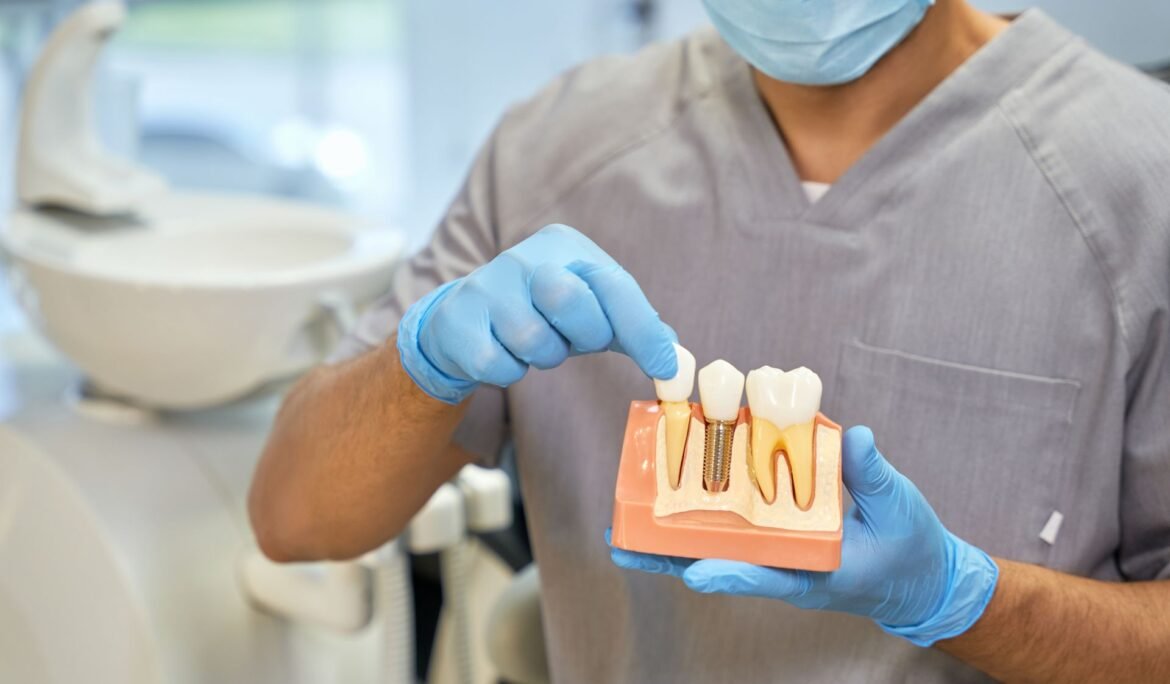
Dental implants are one of the most popular solutions for replacing missing teeth. They are designed to function like natural tooth roots and provide support for artificial teeth such as crowns, bridges, or implant-supported dentures. However, one common concern among patients considering dental implants is whether they need a bone graft before the procedure.
When a tooth is lost, the jawbone in that area may gradually shrink because it no longer receives stimulation from the tooth root. This can reduce the amount of bone available for implant placement. In such situations, a dentist may recommend bone grafting to rebuild the required bone volume.
But does every patient need a bone graft? No. Dental implants can often be placed without bone grafting when sufficient healthy bone is available. Even some patients with moderate bone loss may have alternative treatment options.
Let’s understand when dental implants can be performed without bone grafting, which techniques may help, and when bone grafting is still necessary.
What Is Bone Grafting in Dental Implant Treatment?
Bone grafting is a dental procedure used to increase or rebuild bone in an area where the jawbone does not have sufficient volume to support a dental implant safely.
A dental implant needs adequate bone around it for stability and long-term support. If the jawbone is too thin, too short, or significantly damaged, placing an implant directly may not provide the required foundation.
During a bone grafting procedure, a dentist or oral surgeon places suitable graft material in the deficient area. This material may come from the patient’s own bone, a processed donor source, an animal-derived source, or a synthetic substitute. The material is selected according to the clinical situation.
Over time, the area heals and may develop sufficient bone volume for implant placement. In some cases, bone grafting can be performed at the same time as implant placement, while other cases require a separate healing period before the implant procedure.
Can Dental Implants Be Done Without Bone Grafting?
Yes. Many patients can receive dental implants without undergoing a separate bone grafting procedure.
If the jawbone has sufficient height, width, and quality to accommodate an implant in an appropriate position, additional bone may not be required.
The dentist evaluates several factors before making this decision:
- Available jawbone height and width.
- Bone density and quality.
- Location of the missing tooth.
- Distance from nerves and the sinus cavity.
- Gum health and existing infections.
- Bite forces and the planned replacement tooth.
- General health and healing factors.
For example, a patient who has recently lost a tooth may still have enough healthy bone for implant placement. Another patient who has been without a tooth for several years may have experienced significant bone loss and require additional treatment.
Therefore, the need for bone grafting is determined individually rather than automatically recommended for every implant patient.
Why Does Jawbone Loss Occur After Tooth Extraction?
Natural teeth are supported by roots that stimulate the surrounding jawbone during chewing. When a tooth is removed, this stimulation reduces, and the bone in that area begins to remodel.
Several factors can contribute to bone loss:
1. Tooth Extraction
After an extraction, the bone surrounding the empty tooth socket gradually changes. The width and height of the ridge may reduce during healing.
2. Gum Disease
Advanced periodontal disease can damage the tissues and bone supporting natural teeth. Patients who have lost teeth because of severe gum disease may have reduced bone volume in the affected areas.
3. Long-Term Missing Teeth
When a missing tooth is not replaced for several years, the surrounding jawbone may continue to shrink. This can make future implant placement more challenging.
4. Dental Infections
Untreated infections around a tooth or its root may damage the surrounding bone. The extent of damage depends on the severity and duration of the infection.
5. Long-Term Denture Use
Patients who wear removable dentures for many years may experience gradual changes in the jawbone. Dentures rest on the gums and do not provide the same stimulation as natural tooth roots.
Understanding the cause and extent of bone loss helps the dentist select an appropriate implant treatment plan.
How Can Dentists Place Dental Implants Without Bone Grafting?
In selected cases, dentists may use different implant techniques to make better use of the available bone. These approaches are not suitable for everyone, and each has specific indications.
1. Conventional Dental Implants
If enough healthy bone is present, a conventional dental implant can be placed directly without additional bone grafting.
This is often possible when the bone has adequate height and width and the implant can be positioned correctly while maintaining a safe distance from nearby anatomical structures.
The implant is placed into the jawbone, where it gradually integrates with the surrounding bone. Once healing is satisfactory, a dental crown or other suitable restoration can be attached.
2. Short Dental Implants
Short dental implants may be considered when the available bone height is limited, particularly in selected areas of the back jaw.
Instead of using a longer implant, the dentist may choose a shorter design that fits within the existing bone.
Short implants can sometimes help avoid procedures such as sinus augmentation. However, their suitability depends on bone quality, implant diameter, bite forces, restoration design, and the specific clinical situation.
They are not a universal replacement for bone grafting.
3. Angled Dental Implants
Angled implants are placed at a carefully planned angle rather than vertically.
This technique can help dentists use available bone while avoiding certain anatomical structures, such as the maxillary sinus in the upper jaw or important nerves in the lower jaw.
Angled implants are commonly discussed in full-arch rehabilitation, including selected All-on-4 treatment plans.
The technique may reduce the need for bone grafting in suitable patients, but it requires careful three-dimensional planning and appropriate clinical expertise.
4. Immediate Dental Implants After Tooth Extraction
In selected cases, a dental implant may be placed immediately after a tooth is extracted.
This approach may help reduce the number of separate surgical appointments. However, immediate placement does not automatically prevent bone loss or eliminate the need for grafting.
The dentist must assess the condition of the tooth socket, surrounding bone, infection status, and ability to achieve implant stability.
Sometimes, a small amount of graft material may still be recommended around an immediately placed implant to help manage the gap between the implant and the socket walls.
5. All-on-4 Dental Implant Treatment
All-on-4 is a full-arch treatment approach in which four strategically positioned implants support a complete set of replacement teeth in one jaw.
The posterior implants are often angled to make use of available bone and avoid certain anatomical structures. This may reduce the need for extensive bone grafting in selected patients.
However, All-on-4 is not suitable for everyone with bone loss. The dentist must assess the available bone, implant stability, bite, and final prosthesis design before recommending it.
When Is Bone Grafting Still Necessary?
Although several implant techniques may help avoid bone grafting, there are situations where rebuilding the jawbone is the more appropriate option.
A bone graft may be recommended when:
- The jawbone is too narrow to support an implant safely.
- There is insufficient bone height in the planned implant area.
- Severe bone loss has occurred after tooth extraction.
- Previous gum disease has damaged the supporting bone.
- A large defect exists because of infection or trauma.
- The planned implant position cannot be achieved predictably with the available bone.
- Additional support is required for the planned restoration.
The goal of bone grafting is not simply to make the implant procedure possible. It is to create a suitable foundation for a stable and functional tooth replacement.
Avoiding a graft should not become more important than achieving a safe and properly planned result.
Do You Need a Sinus Lift Before Upper Jaw Dental Implants?
The upper back jaw has an anatomical structure called the maxillary sinus. When upper molars or premolars are lost, the available bone height may become limited due to bone resorption and changes in the sinus floor.
A sinus lift, also known as sinus augmentation, is a procedure used to increase the available bone height in selected cases.
However, not every patient who needs an upper back tooth implant requires a sinus lift.
Depending on the available bone, the dentist may consider:
- Conventional implants when sufficient bone height is present.
- Short implants in selected cases.
- Angled implant placement where appropriate.
- Sinus augmentation when additional bone is required.
The choice depends on the amount of remaining bone, the implant position, and the stability that can be achieved.
How Does a Dentist Check Whether You Have Enough Bone?
A clinical examination alone may not provide all the information needed to assess jawbone volume. Dental imaging is an important part of implant planning.
Clinical Examination
The dentist checks the gums, missing tooth area, oral hygiene, bite, and surrounding teeth. Any infection or gum disease may need to be treated before implant surgery.
Dental X-Rays
Dental X-rays can provide useful information about the teeth, roots, and surrounding bone. They may be used during the initial assessment.
CBCT Scan
A Cone Beam Computed Tomography (CBCT) scan provides three-dimensional images of the jawbone.
It helps the dentist evaluate:
- Bone height and width.
- Bone shape and available volume.
- Position of nerves and blood vessels.
- Location of the maxillary sinus.
- Areas of bone loss or defects.
- Possible implant positions.
CBCT imaging can help create a more accurate treatment plan and identify whether bone grafting or an alternative implant technique may be required.
Dental Implants With Bone Grafting vs Without Bone Grafting
Both approaches can be appropriate, depending on the patient’s condition.
| Feature | Without Bone Grafting | With Bone Grafting |
|---|---|---|
| Bone requirement | Sufficient existing bone must be available | Used when additional bone volume is required |
| Surgical procedure | May involve fewer surgical stages | Includes a grafting procedure |
| Healing | Depends on implant integration | May require additional healing for graft maturation |
| Treatment planning | Uses available bone | Rebuilds bone where needed |
| Suitability | Selected patients with adequate bone | Patients with specific bone deficiencies |
A treatment without bone grafting may involve fewer procedures, but it is not automatically better. If the existing bone cannot support the implant in the correct position, grafting may be necessary for a more appropriate treatment plan.
What Are the Benefits of Avoiding Bone Grafting?
When clinically suitable, placing dental implants without a separate bone grafting procedure may offer several advantages.
1. Fewer Surgical Procedures
Patients may avoid an additional grafting surgery when the available bone is sufficient or an appropriate alternative implant technique can be used.
2. Potentially Shorter Treatment Time
Without a separate graft-healing stage, some patients may be able to proceed with implant placement sooner. The actual treatment timeline still depends on implant integration and individual healing.
3. Reduced Surgical Complexity
Some graft-free approaches may involve fewer surgical steps. However, techniques such as angled implants still require careful planning and experienced clinical execution.
4. Potentially Lower Overall Cost
Avoiding a separate grafting procedure may reduce treatment expenses in some cases. The final cost depends on the implant system, surgical technique, restoration, and other clinical requirements.
5. Less Postoperative Recovery
When an additional grafting procedure is not required, patients may avoid the recovery associated with that particular surgery. Implant placement itself still involves healing and postoperative care.
Are There Any Risks of Dental Implants Without Bone Grafting?
Yes. Dental implant surgery carries risks whether or not bone grafting is performed.
Possible complications include:
- Failure of the implant to integrate with the jawbone.
- Infection around the implant.
- Gum inflammation or recession.
- Damage to nearby nerves or anatomical structures.
- Implant instability.
- Bone loss around the implant.
- Mechanical problems with the crown or bridge.
The risk may increase if an implant is placed in an unsuitable position or if the available bone cannot provide adequate support.
This is why dentists should not compromise implant positioning simply to avoid a graft. The implant must be placed in a position that supports both healthy tissue and a functional restoration.
How Much Does Dental Implant Treatment Without Bone Grafting Cost?
The cost of dental implants varies depending on the patient’s oral condition, implant system, treatment complexity, and type of final restoration.
Some important cost factors include:
- Number of implants required.
- Implant brand and components.
- Location of the missing tooth.
- Type of dental crown or bridge.
- Need for additional procedures.
- Diagnostic imaging and consultation.
- Temporary restorations, if required.
- Follow-up and maintenance.
Patients should ask for a detailed treatment estimate and understand what is included before starting treatment.
If a bone graft is not required, the overall treatment cost may be lower in some cases. However, the final estimate should be based on an examination rather than a general online price.
How Can You Maintain Dental Implants After Treatment?
Whether an implant is placed with or without bone grafting, long-term care is essential.
Patients should follow these recommendations:
- Brush twice daily with a soft-bristled toothbrush.
- Clean carefully around the implant and gumline.
- Use interdental brushes or floss as recommended.
- Avoid smoking and tobacco products.
- Attend regular dental check-ups.
- Follow professional cleaning recommendations.
- Report swelling, bleeding, discomfort, or implant movement promptly.
Implants cannot develop natural tooth decay, but the tissues surrounding them can become inflamed. Poor oral hygiene may lead to peri-implant disease and bone loss.
Regular professional monitoring helps identify potential problems early.
Why Choose a Professional Dental Implant Consultation in Mohali?
Patients considering dental implants in Mohali should undergo a detailed clinical examination before deciding whether bone grafting is necessary.
An appropriate consultation should include an assessment of the missing tooth area, gum health, available bone, bite, medical history, and suitable restoration options.
At Advanced Dental Center & Clinic, Mohali, patients can discuss their tooth replacement concerns and understand the treatment options that may be suitable for their dental condition.
The clinic is located at 52, Gian Jyoti Road, Phase 2, Sector 54, Sahibzada Ajit Singh Nagar, Mohali.
A personalised treatment plan can help patients understand whether conventional implants, short implants, angled implants, bone grafting, or another tooth replacement option should be considered.
For additional information about healthcare and treatment resources, you can also visit M Medical Centre.
Frequently Asked Questions About Dental Implants Without Bone Grafting
1. Can I get a dental implant if I have experienced bone loss?
Possibly. The suitability depends on the remaining bone’s height, width, and quality. Some patients may qualify for short or angled implants, while others may require bone grafting.
2. Is bone grafting compulsory for every dental implant?
No. Bone grafting is not required when enough healthy bone is available to support the implant in an appropriate position.
3. Can short dental implants avoid bone grafting?
Short implants may help avoid bone grafting in selected patients with limited bone height. Their suitability depends on bone quality, implant position, bite forces, and restoration requirements.
4. Can I get dental implants after wearing dentures for many years?
Yes, some long-term denture users can receive dental implants. However, wearing dentures for many years may be associated with jawbone loss. A clinical examination and CBCT scan can help determine the available options.
5. Can All-on-4 dental implants be placed without bone grafting?
All-on-4 may reduce the need for extensive bone grafting in selected patients because of the strategic placement of implants. However, it is not suitable for every patient, and additional procedures may still be required.
6. Is dental implant treatment faster without bone grafting?
It may be faster when a separate grafting and healing stage can be avoided. However, implant integration still takes time, and the final restoration should only be placed when the dentist considers healing satisfactory.
7. Is bone grafting painful?
Bone grafting is generally performed under local anaesthesia, and additional sedation may be considered where appropriate. Some swelling, discomfort, or bruising can occur during recovery. The dentist will explain pain management and postoperative instructions.