








Losing most or all of your natural teeth can affect much more than your smile. It may make chewing difficult, change the way you speak, affect facial appearance, and reduce confidence in everyday situations. Traditional dentures are one option for replacing missing teeth, but some patients find them uncomfortable, loose, or inconvenient.
Modern implant dentistry offers another solution: All-on-4 dental implant treatment. This approach can replace an entire arch of missing teeth using just four strategically placed dental implants in suitable patients. Instead of placing an individual implant for every missing tooth, four implants are used to support a fixed set of replacement teeth.
But can four dental implants really replace all the teeth in your upper or lower jaw? Who is suitable for this treatment, how does the procedure work, and what should patients know before choosing it? Let’s explore the details.
What Is All-on-4 Dental Implant Treatment?
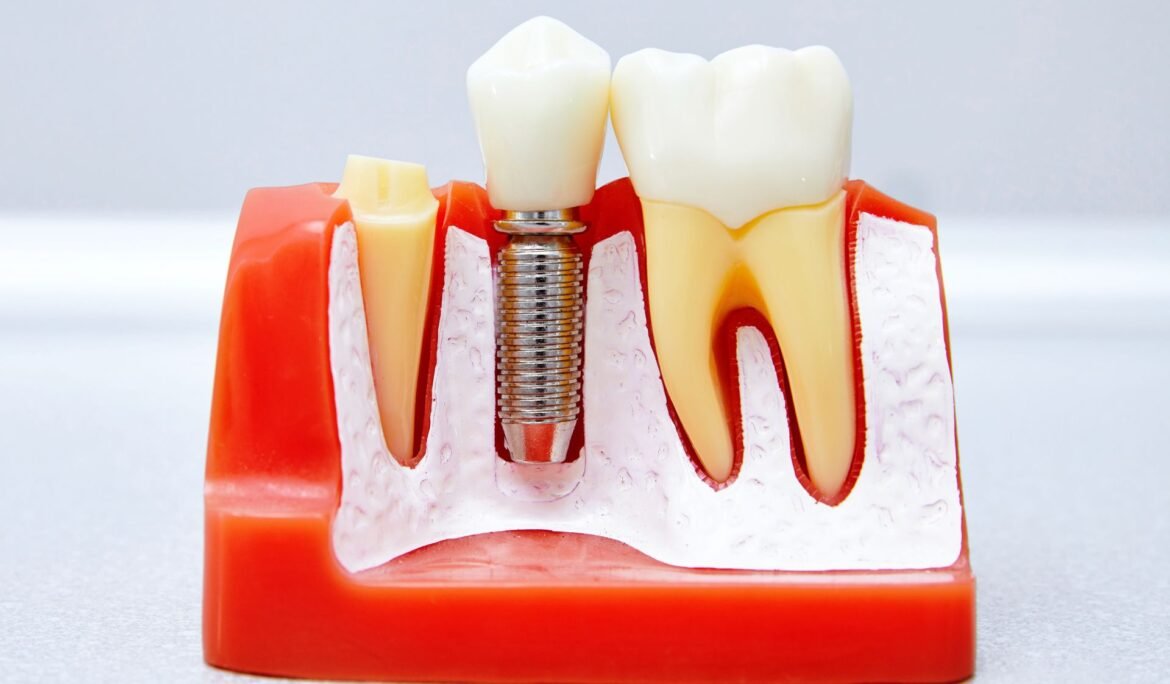
All-on-4 is a full-arch tooth replacement technique in which a complete set of artificial teeth is supported by four dental implants placed in the jawbone. These implants act as artificial tooth roots and provide support for a fixed dental prosthesis.
The treatment generally involves:
- Two implants positioned towards the front of the jaw.
- Two implants placed towards the back, often at an angle.
- A fixed prosthesis attached to the implants.
- A complete set of replacement teeth designed to restore appearance and chewing function.
The angled placement of the posterior implants can help make use of available bone and may reduce the need for bone grafting in selected cases. However, this does not mean that every patient can avoid bone grafting or other preparatory procedures.
All-on-4 can be considered for the upper jaw, lower jaw, or both, depending on the patient’s dental condition and treatment requirements.
Can Four Dental Implants Replace an Entire Arch of Missing Teeth?
Yes. In appropriately selected patients, four dental implants can support a complete fixed set of replacement teeth for one jaw. This means patients who have lost all their upper or lower teeth may not need an individual implant for every missing tooth.
The four implants are strategically positioned to distribute chewing forces across the jaw. A specially designed bridge or full-arch prosthesis is then attached to these implants.
However, the number of implants required is not the same for everyone. Some patients may benefit from six or more implants, depending on their bone quality, jaw anatomy, bite, medical history, and the design of the final teeth.
It is also important to understand that four implants replace the function of a complete arch of teeth through a connected prosthesis. They do not mean that four implants are individually replacing every natural tooth.
How Does the All-on-4 Dental Implant Procedure Work?
All-on-4 treatment involves several stages. The dentist evaluates the patient’s oral health, plans implant positions, places the implants, and attaches the replacement teeth according to the clinical situation.
1. Initial Dental Consultation
The first step is a detailed dental examination. The dentist reviews the patient’s medical and dental history and checks the condition of the gums, remaining teeth, jawbone, and bite.
Patients who have loose teeth, advanced tooth loss, or difficulty wearing dentures may be evaluated for full-arch implant treatment.
The consultation also helps identify conditions such as gum disease, uncontrolled diabetes, smoking habits, and other factors that may affect implant healing.
2. Digital Imaging and Treatment Planning
Dental X-rays and, when indicated, a CBCT scan may be used to assess the jawbone and surrounding anatomical structures.
The dentist evaluates:
- Available bone height and width.
- Bone density and quality.
- Position of nerves and sinuses.
- Existing infections or dental problems.
- Suitable implant positions.
- The expected design of the final prosthesis.
Careful planning is essential because implant placement must consider both the available bone and the final appearance and function of the replacement teeth.
3. Removal of Remaining Teeth, If Required
Some patients seeking All-on-4 treatment still have a few natural teeth remaining. If these teeth are severely damaged, loose, or cannot be restored, extraction may be recommended.
However, healthy or restorable teeth should not automatically be removed just to proceed with full-arch implant treatment. The dentist should assess whether preserving natural teeth is a reasonable option.
4. Placement of Four Dental Implants
The implants are surgically placed into the jawbone at carefully planned positions. Two implants are generally placed towards the front, while the other two may be angled towards the back.
Angled implants can help use available bone more effectively in certain cases. The exact position and angle depend on the patient’s anatomy and treatment plan.
5. Temporary or Immediate Fixed Teeth
In selected patients, a temporary fixed prosthesis may be attached soon after implant placement. This is sometimes called immediate loading.
However, immediate loading is not suitable for everyone. It depends on factors such as implant stability, bone quality, bite forces, and overall clinical conditions.
If the implants need more time to heal, the patient may be advised to use another temporary tooth replacement option during this period.
6. Final Teeth Placement
After the implants have integrated with the jawbone and healing is satisfactory, the temporary prosthesis can be replaced with the final restoration.
The final teeth are designed to provide appropriate appearance, comfort, speech, and chewing function. The dentist checks the bite and makes adjustments where necessary.
Who Is a Suitable Candidate for All-on-4 Treatment?
All-on-4 may be considered for adults who have lost most or all of their teeth in one jaw or whose remaining teeth have a poor long-term prognosis.
Potential candidates may include:
- People who have lost all teeth in the upper or lower jaw.
- Patients struggling with loose or uncomfortable dentures.
- Individuals with multiple severely damaged or non-restorable teeth.
- Patients who want a fixed alternative to removable full dentures.
- People with sufficient bone in suitable locations for implant placement.
However, being without teeth does not automatically make someone suitable for All-on-4.
A detailed clinical assessment is necessary to determine whether four implants can safely and predictably support the planned prosthesis.
What If You Have Low Jawbone Density or Bone Loss?
One of the common concerns among patients considering dental implants is insufficient jawbone.
After tooth loss, the jawbone may gradually shrink because it no longer receives normal stimulation from natural tooth roots. This can make implant placement more challenging, especially in patients who have worn dentures for many years.
All-on-4 uses strategically positioned implants, including angled posterior implants, which may help utilise available bone. In selected cases, this approach can reduce the need for extensive bone grafting.
However, it is not a universal solution for severe bone loss. Some patients may still require bone grafting, sinus augmentation, alternative implant techniques, or a different treatment plan.
A CBCT scan and clinical evaluation help the dentist determine which approach is appropriate.
All-on-4 vs Traditional Dental Implants: What Is the Difference?
Both All-on-4 and conventional dental implants are used to replace missing teeth, but their treatment designs are different.
| Feature | All-on-4 Treatment | Individual Dental Implants |
|---|---|---|
| Implant requirement | Often four implants per arch | Depends on the number of teeth being replaced |
| Tooth replacement | Supports a complete arch prosthesis | Replaces individual teeth or supports bridges |
| Prosthesis | Usually a connected fixed set of teeth | Individual crowns or implant-supported bridges |
| Treatment planning | Full-arch planning | Site-specific planning |
| Suitability | Selected patients with extensive tooth loss | Patients missing one or more teeth |
The right option depends on how many teeth are missing, the condition of the remaining teeth, bone availability, and the patient’s long-term oral health goals.
For someone missing only one or two teeth, individual implants may be more appropriate. For someone who has lost an entire arch, All-on-4 may be one possible treatment option.
What Are the Benefits of All-on-4 Dental Implants?
All-on-4 treatment can offer several benefits for suitable patients.
1. Complete Tooth Replacement With Fewer Implants
One of the main advantages is that a full arch of replacement teeth can be supported by four implants in selected cases. This may reduce the number of implants required compared with replacing every missing tooth individually.
2. Fixed Alternative to Removable Dentures
Traditional dentures can move during eating or speaking, particularly when the jawbone has changed over time. A fixed implant-supported prosthesis is attached to the implants and is not removed by the patient during normal daily activities.
3. Improved Chewing Function
A properly planned and maintained implant-supported prosthesis can help patients chew more comfortably than an unstable removable denture. However, patients may need time to adapt and should follow dietary instructions during healing.
4. Potentially Reduced Need for Bone Grafting
The strategic positioning of implants may allow treatment in patients with limited bone in certain areas. This can reduce the need for additional grafting procedures in selected cases, although it cannot eliminate the need in every patient.
5. Improved Smile and Facial Support
A full-arch prosthesis can restore missing teeth and help support the lips and surrounding facial tissues. The final appearance depends on the patient’s anatomy, prosthesis design, and treatment planning.
6. Convenience in Daily Life
Unlike removable dentures, a fixed All-on-4 prosthesis generally remains in place. Patients still need to maintain excellent oral hygiene and attend regular dental check-ups.
Are There Any Risks or Limitations of All-on-4 Treatment?
Although All-on-4 can be an effective option for suitable patients, it is a surgical procedure and has limitations.
Possible complications include:
- Infection around the implants.
- Swelling, discomfort, or bleeding after surgery.
- Failure of an implant to integrate with the bone.
- Damage to nearby anatomical structures.
- Changes in speech or bite during the adjustment period.
- Loosening, chipping, or fracture of the prosthesis.
- Inflammation and bone loss around implants if oral hygiene is inadequate.
Some patients may need additional procedures before implant placement. Others may not be suitable for immediate loading and will require a longer healing period.
The long-term success of treatment depends on proper diagnosis, surgical planning, prosthesis design, home care, and regular professional maintenance.
How Long Does All-on-4 Dental Implant Treatment Take?
The treatment timeline varies from patient to patient.
In some cases, implants and a temporary fixed prosthesis can be placed on the same day. This is possible only when clinical conditions, including implant stability and bite considerations, allow immediate loading.
In other cases, the dentist may recommend a healing period before attaching the final teeth.
A general treatment sequence includes:
- Initial consultation and diagnostic imaging.
- Treatment planning and preparation.
- Implant placement.
- Healing and integration of implants with the jawbone.
- Final prosthesis fabrication and placement.
- Follow-up appointments and maintenance.
The complete process may take several months, especially when additional procedures are required. Patients should not assume that every All-on-4 treatment can be completed with permanent teeth in a single day.
How Much Does All-on-4 Dental Implant Treatment Cost?
The cost of All-on-4 treatment depends on several clinical and technical factors. There is no single price that applies to every patient.
Important cost factors include:
- Whether treatment is required for one jaw or both jaws.
- Type, brand, and number of implants used.
- Bone quality and whether grafting is required.
- Type and material of the temporary and final prosthesis.
- Complexity of surgery.
- Diagnostic scans and other investigations.
- Follow-up and maintenance requirements.
Patients should request a detailed treatment estimate that explains what is included, such as implant components, temporary teeth, final prosthesis, extractions, and any additional procedures.
Choosing treatment based only on the lowest quoted price may not be the best approach. Understanding the treatment plan, materials, clinical expertise, and long-term maintenance requirements is equally important.
How Should You Care for All-on-4 Dental Implants?
Good oral hygiene is essential for protecting implant-supported teeth. Although the replacement teeth cannot develop natural tooth decay, the surrounding gums and bone can still develop inflammation and infection.
Patients should follow their dentist’s instructions and maintain a consistent cleaning routine.
Important care tips include:
- Brush twice daily using a suitable toothbrush.
- Clean around the prosthesis and implant areas carefully.
- Use interdental brushes or other recommended cleaning aids.
- Use a water flosser if advised by the dentist.
- Avoid smoking, as it can negatively affect gum and implant health.
- Follow the recommended diet during the healing period.
- Attend regular professional check-ups.
- Report pain, swelling, bleeding, or movement of the prosthesis promptly.
The dentist may also need to remove the prosthesis periodically for professional cleaning and assessment, depending on its design.
Why Is Professional Consultation Important Before Choosing All-on-4?
All-on-4 is not simply a procedure in which four implants are placed to hold a set of artificial teeth. It requires careful assessment of bone anatomy, gum health, bite forces, medical history, and the design of the final restoration.
A professional consultation helps determine whether four implants are sufficient or whether another approach, such as six implants, individual implants, a conventional bridge, or removable dentures, may be more appropriate.
Patients looking for dental implant treatment in Mohali should choose a clinic that provides a clear explanation of the diagnosis, available options, expected timeline, possible risks, and maintenance requirements.
For more information about dental care and treatment options, patients can also explore M Medical Centre as an additional healthcare resource.
Frequently Asked Questions About All-on-4 Dental Implants
1. Can All-on-4 replace all teeth in the upper and lower jaw?
Yes, All-on-4 may be used to replace a complete arch in the upper jaw, lower jaw, or both. When both arches require treatment, each arch needs its own implant-supported treatment plan.
2. Are four dental implants enough to support a full set of teeth?
Four implants can support a full-arch prosthesis in appropriately selected patients. However, some patients may need six or more implants depending on their bone condition, bite, and prosthesis design.
3. Is All-on-4 better than traditional dentures?
All-on-4 provides a fixed implant-supported option, while traditional dentures are removable. The most suitable choice depends on the patient’s oral health, medical condition, preferences, and budget.
4. Can All-on-4 be done if I have been wearing dentures for many years?
Possibly. Long-term denture users can be assessed for implant treatment. However, jawbone loss may affect implant placement, so imaging and a detailed clinical examination are necessary.
5. Does All-on-4 treatment require bone grafting?
Not always. The angled placement of implants may reduce the need for bone grafting in some patients. However, additional bone procedures may still be necessary depending on the amount and quality of available bone.
6. Can I get fixed teeth on the same day as implant surgery?
Some patients may qualify for immediate fixed temporary teeth. This depends on implant stability, bone quality, bite conditions, and the overall treatment plan. It is not guaranteed for every patient.
7. How long do All-on-4 dental implants last?
Implants can function for many years, but their lifespan varies. Oral hygiene, smoking, general health, bite forces, and regular professional care all influence long-term outcomes. The prosthesis may require repair or replacement over time.